
The Day the Water Came Calling – A California Story
The Millers loved their little place in Ventura County. A neat ranch house, built in the late 70s, nestled comfortably a few blocks from the coast. Not on the beach, mind you, but close enough to smell the salt air on a good breeze. They’d lived there for twenty years, raising their kids, enjoying the California sunshine. Floods? They never gave them much thought. Sure, they saw the news about the big rivers up north, or the occasional flash flood in the desert, but here, in their quiet neighborhood? It felt safe.
Then came that winter. Rain, day after day, week after week. It wasn’t just a storm; it was a relentless soaking. The ground became saturated. Creeks swelled. One morning, Mrs. Miller woke up to an odd sound, a gurgling from outside. She peered out the window and saw it – water, not just in puddles, but creeping up the driveway, pooling around the rose bushes. Within hours, it was lapping at their front door. By noon, two feet of muddy water stood in their living room. Ruined furniture, warped floors, cherished photos floating by. Their home, their sanctuary, suddenly looked like a murky pond.
They had homeowners insurance, of course. Everybody does. But the Millers learned a painful lesson that day: standard home insurance doesn’t cover flood damage. Not a drop.
Thinking You’re Safe? Think Again.
Many California homeowners share the Millers’ mindset. They live far from a major river, maybe even on a gentle slope. They figure floods are for other places, other states. This thinking is a dangerous gamble. California, with its unique geography and weather patterns, faces a flood risk that’s often misunderstood and frequently underestimated.

It’s Not Just About Rivers Anymore
When you hear “flood,” you probably picture a river overflowing its banks. Or maybe a coastal storm surge. And yes, those are real threats, especially in places like the Sacramento-San Joaquin Delta or along the state’s extensive coastline. But that’s not the whole story. Urban flooding is a huge problem here. Think about it: miles of concrete, asphalt, and rooftops. When a heavy rain hits, that water has nowhere to go but up and out. Storm drains get overwhelmed. Streets turn into canals. Your basement, or even your ground floor, becomes a target, even if you’re miles from any natural waterway.
Down in the Inland Empire, for example, sudden, intense thunderstorms can turn dry washes into raging torrents in minutes. In the valleys, flat terrain means water just sits there, slowly creeping into homes. These aren’t “river floods.” They’re rain floods, storm floods, sheet floods. And they can be just as devastating.
The Wildfire Connection
Here’s where it gets interesting, and often heartbreakingly ironic. California’s increasing wildfire problem directly worsens its flood risk. When wildfires burn through hillsides and mountains, they don’t just destroy trees; they sterilize the soil. The ground becomes like baked clay, unable to absorb water. So, when the rains eventually come – and they always do – that water races unimpeded down the scorched slopes, picking up ash, debris, and mud. These post-wildfire mudslides and debris flows can be far more destructive than a typical flood. They carry boulders, uproot trees, and can wipe out entire homes in their path.
Remember the devastating mudslides in Montecito after the Thomas Fire? Homes that survived the flames were later destroyed by the mud. That’s a stark reminder that if you live anywhere near a burn scar – and many, many Californians do – your flood risk has likely jumped dramatically, even if you felt perfectly safe before.
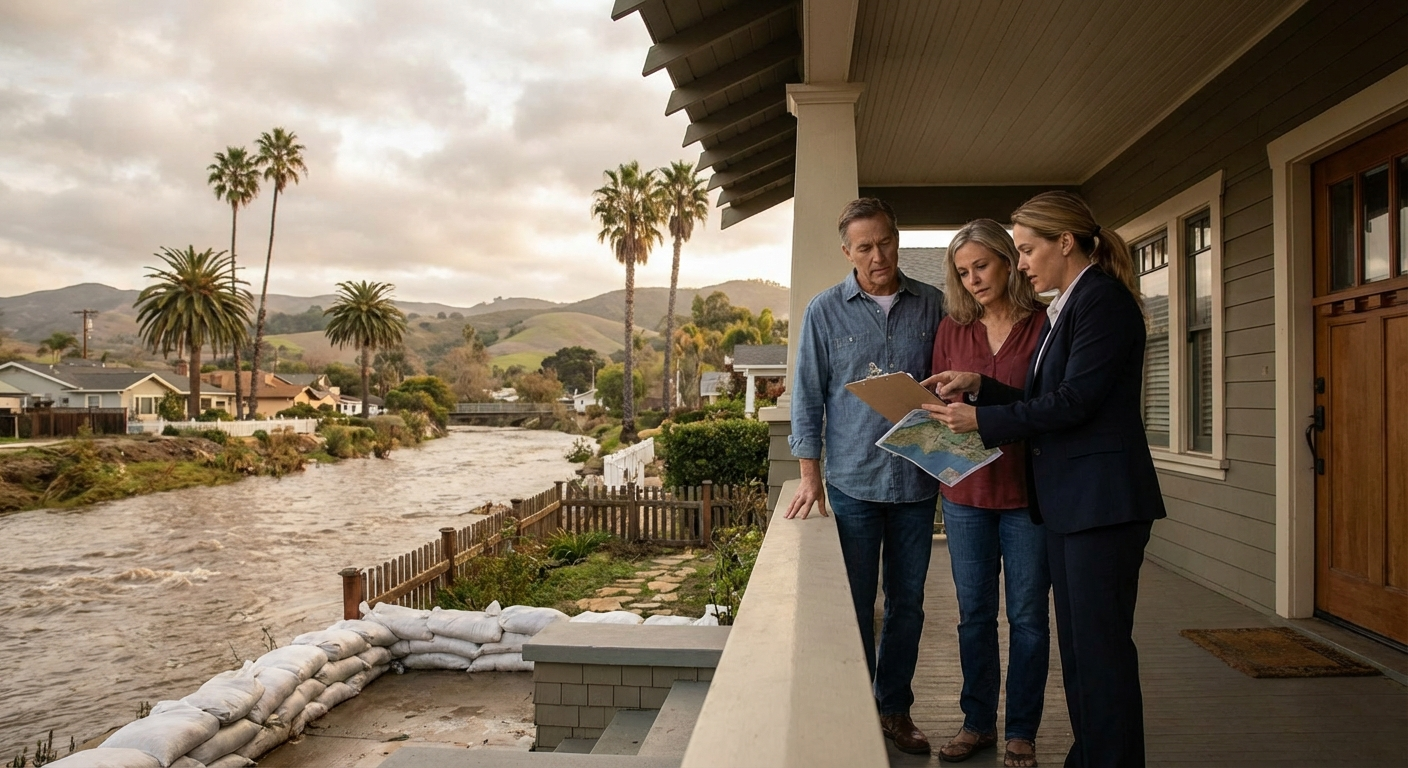
What Flood Insurance Really Covers (and Doesn’t)
Okay, so you need flood insurance. But what does it actually cover? It’s not a magic bullet for all water damage. Generally, flood insurance addresses damage directly caused by flooding – that’s defined as an overflow of inland or tidal waters, unusual and rapid accumulation or runoff of surface waters from any source, or mudflow.
NFIP vs. Private Options
For years, the National Flood Insurance Program (NFIP), run by FEMA, was pretty much the only game in town. It still is for many people. NFIP policies offer coverage for your building structure – things like your foundation, walls, electrical systems, furnaces – and separate coverage for your personal belongings, like furniture, electronics, and clothing. There are limits, though: usually up to $250,000 for the building and $100,000 for contents. For many California homes, especially in pricier areas, that might not be enough to rebuild.
But wait – that’s not the whole story anymore. Over the last decade, a private flood insurance market has grown, offering alternatives to the NFIP. These private policies can sometimes offer higher coverage limits, broader coverage (like for additional living expenses if you’re displaced), and sometimes even more competitive pricing, especially in areas considered lower risk by FEMA. It’s a good idea to compare both.
The Deductible Difference
Just like with your regular home insurance, flood insurance comes with a deductible. This is the amount you pay out of pocket before your insurance kicks in. You might have separate deductibles for your building and your contents. Choosing a higher deductible can lower your premium, but it means you’ll pay more if you have a claim. Make sure you pick a deductible you can comfortably afford in an emergency. Nobody wants to be underwater financially after being underwater physically.
Decoding Your Flood Insurance Bill
Flood insurance premiums aren’t some random number. They’re calculated based on a bunch of factors, and in California, some of those factors are getting more complicated.
What Drives the Price Up?
Three things drive your premium up. First, your flood zone. FEMA maps out flood zones, and if you’re in a high-risk zone (like an AE or VE zone), you’ll pay more. Simple as that. Second, your home’s elevation. Is it built at or above the base flood elevation? If so, you’ll pay less. Older homes, especially those not built to modern flood standards, often cost more to insure. Third, your home’s characteristics – its age, construction type, and how many floors it has.
The FEMA Factor: Risk Rating 2.0
Here’s a big one that’s changed things for many Californians: FEMA’s new pricing methodology, called Risk Rating 2.0. This system aims to price flood insurance more fairly by taking into account a lot more data than just flood zones. It looks at individual property characteristics like the distance to a water source, different flood types (riverine, coastal, pluvial), and even the cost to rebuild your specific home.
For some, this has meant lower premiums. For others, particularly in areas previously considered lower risk but now identified as having a higher *individual* risk, premiums have jumped. Honestly, it’s a bit of a mixed bag, but it reflects a more granular understanding of flood exposure. It also means that even if your neighbor has a certain rate, yours could be quite different.
Finding Your Policy in a Tricky Market
California’s insurance market has been, well, challenging lately. You’ve probably heard stories about insurers pulling back from the state, especially for regular homeowners insurance. This makes finding *any* insurance tricky, let alone specialized policies like flood.
Why Some Insurers are Pulling Back
The short answer is yes. The real answer is more complicated. Insurers are in the business of assessing risk. When risks become too high, too uncertain, or too expensive to cover, they adjust their offerings. Wildfires, for example, have driven up claims and costs, causing some big names like State Farm and Farmers to limit new policies. While this mostly impacts standard home insurance, it creates a ripple effect. It means fewer options, less competition, and often higher prices across the board. The good news is, flood insurance is often a separate beast. While the market is tighter, policies are still available.
Working with an Expert Like Karl Susman
This is where having an experienced independent agent makes a huge difference. Someone like Karl Susman at California Home Insurance Rates (CA License #0B75129) knows the California market inside and out. They don’t just offer one company’s policy; they work with multiple insurers, both NFIP and private, to find the best fit for your specific home and risk profile. They can explain the nuances of Risk Rating 2.0, help you compare deductibles, and make sure you’re not overpaying or under-covered. Trying to sort through all the options yourself can feel like trying to bail out a leaky boat with a teacup. An agent can guide you through the choppy waters.
Making the Right Call for Your Home
No one wants to think about their home being damaged by a flood. It’s an unpleasant thought. But ignoring the risk doesn’t make it go away. The Millers learned that the hard way. They eventually rebuilt, but the financial and emotional toll was immense, all because they thought it wouldn’t happen to them.
Protecting your home and your financial future means being prepared for all possibilities. Flood insurance isn’t just a piece of paper; it’s peace of mind. It’s the difference between starting over from scratch and having the resources to put your life back together.
If you’re a California homeowner, take a moment to consider your flood risk. It’s probably higher than you think. Find out what your options are. Get real answers. You can start by getting a quote and exploring your options today. Visit https://californiahomeinsurancerates.com/quote/ to begin the process. Or simply pick up the phone and call Karl Susman at (877) 411-5200. He and his team are there to help.
Frequently Asked Questions About California Flood Insurance
Do I really need flood insurance if I live in a low-risk flood zone?
Honestly, yes, you should absolutely consider it. About 25% of all flood claims come from properties in what FEMA considers “low-to-moderate risk” zones. Those zones just mean your risk is lower, not zero. Plus, a small flood that causes minor damage can still cost thousands to repair. The premiums in these zones are often much lower, making it a smart investment for even a small chance of flooding.
Is flood insurance required by law in California?
It’s not a state law requirement for everyone. But if you live in a high-risk flood zone and have a mortgage from a federally regulated or insured lender, then yes, your lender will almost certainly require you to carry flood insurance. Even if it’s not required, it’s still a smart financial decision.
What’s the difference between flood damage and water damage in my regular home insurance?
Big difference. Standard home insurance covers water damage that’s “sudden and accidental” and originates from *within* your home – like a burst pipe, a leaky appliance, or a hole in your roof letting rain in. Flood insurance covers damage caused by water that comes from *outside* your home, affecting two or more properties or two or more acres. Think overflowing rivers, heavy rain runoff, or storm surge.
How long does it take for flood insurance to go into effect?
Typically, there’s a 30-day waiting period before an NFIP flood insurance policy becomes effective. This is to prevent people from buying coverage only when a storm is already on its way. There are a few exceptions, like if you’re buying a new home and your lender requires it at closing. Private flood policies sometimes have shorter waiting periods, but it varies, so always check the specifics.
Can I get flood insurance if I’ve had a previous flood?
Yes, usually. Flood insurance is generally available even if your property has flooded before. In fact, if you’ve previously received federal disaster assistance for flood damage, you may be required to maintain flood insurance to be eligible for future assistance. It’s designed to help you rebuild.
Ready to protect your home from California’s unpredictable weather? Get a personalized quote for flood insurance today. Visit https://californiahomeinsurancerates.com/quote/ for quick and easy options. You can also call Karl Susman at California Home Insurance Rates, CA License #0B75129, at (877) 411-5200.
This article is for informational purposes only and does not constitute financial advice.