
Feeling Lost in the California Home Insurance Maze? You’re Not Alone.
Honestly, it’s a tough time to be a homeowner in California. The headlines scream about insurers pulling out, premiums jumping 40% between 2022 and 2024 for some folks, and then you get your renewal notice and just feel a knot in your stomach. Maybe you’ve even been non-renewed. You’re not imagining it; the system feels broken. It’s enough to make anyone feel confused, frustrated, or even a little scared about protecting their biggest asset. We hear it every day. Your home is more than just walls and a roof; it’s where your life happens. So, when disaster strikes – a wildfire sweeping through Ventura County, an earthquake rumbling the Inland Empire, or even just a burst pipe in your Valley home – you need to know your insurance will actually let you rebuild your life, not just leave you with a fraction of what you need.
Which brings up something most people miss: the huge difference between “replacement cost” and “actual cash value” in your home insurance policy. For most California homeowners, understanding this distinction isn’t just important; it’s absolutely critical right now.
Replacement Cost: The Gold Standard for Rebuilding Your Life
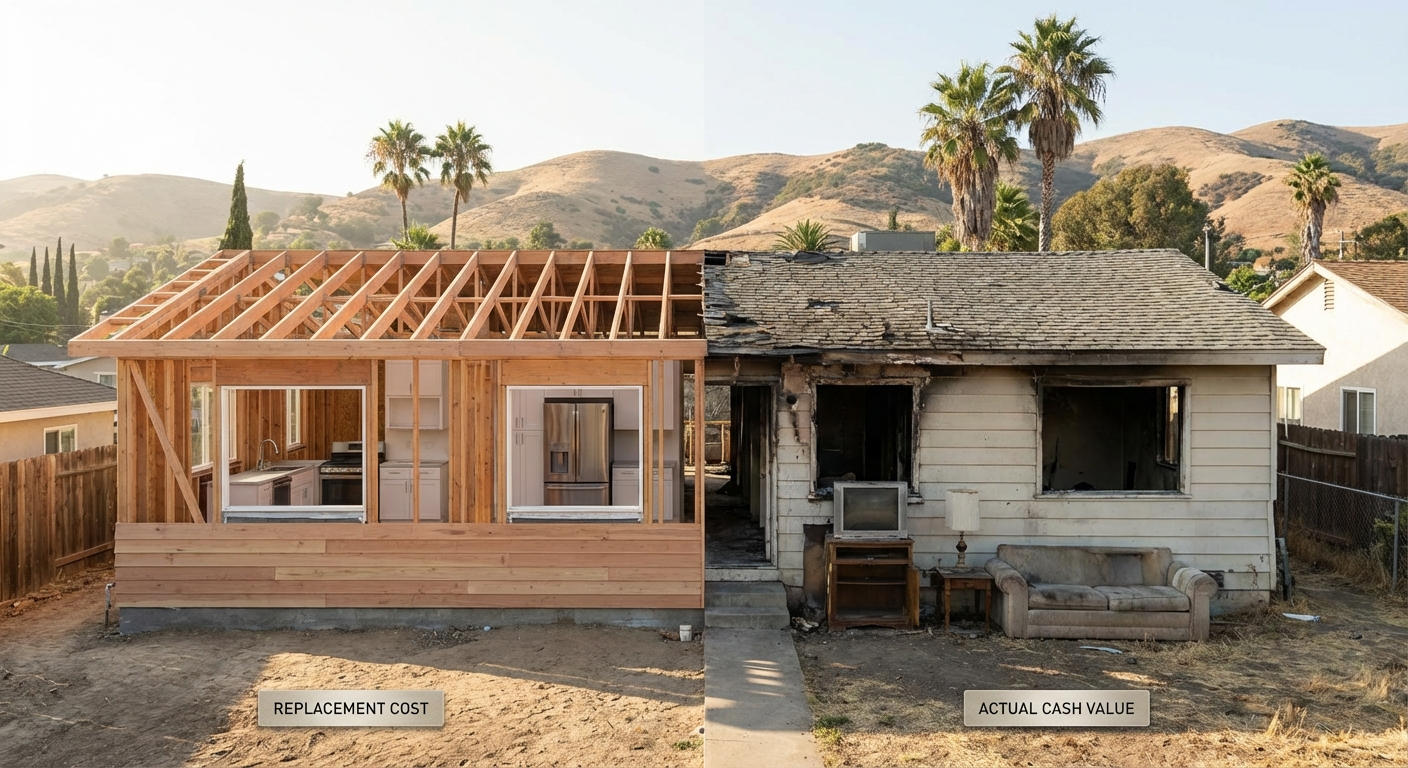
Think of replacement cost (RC) this way: it’s the money you get to rebuild your home or replace your damaged belongings with brand new ones, without any deduction for age or wear and tear. If a fire rips through your kitchen and destroys your 10-year-old stove, a replacement cost policy pays for a new stove, not what your old one was “worth” before the fire. Simple. If your roof, installed 15 years ago, needs to be entirely replaced after a storm, your policy covers the cost to put a brand new roof on your house, using today’s materials and labor rates.
This is what most people *think* they have when they buy home insurance. They imagine their policy will make them whole again, put them back exactly where they were, or even better, with new stuff. In a perfect world, that’s exactly what replacement cost coverage does. It gives you the peace of mind that if the worst happens, you won’t be digging into your savings just to get a new couch or rebuild a wall.
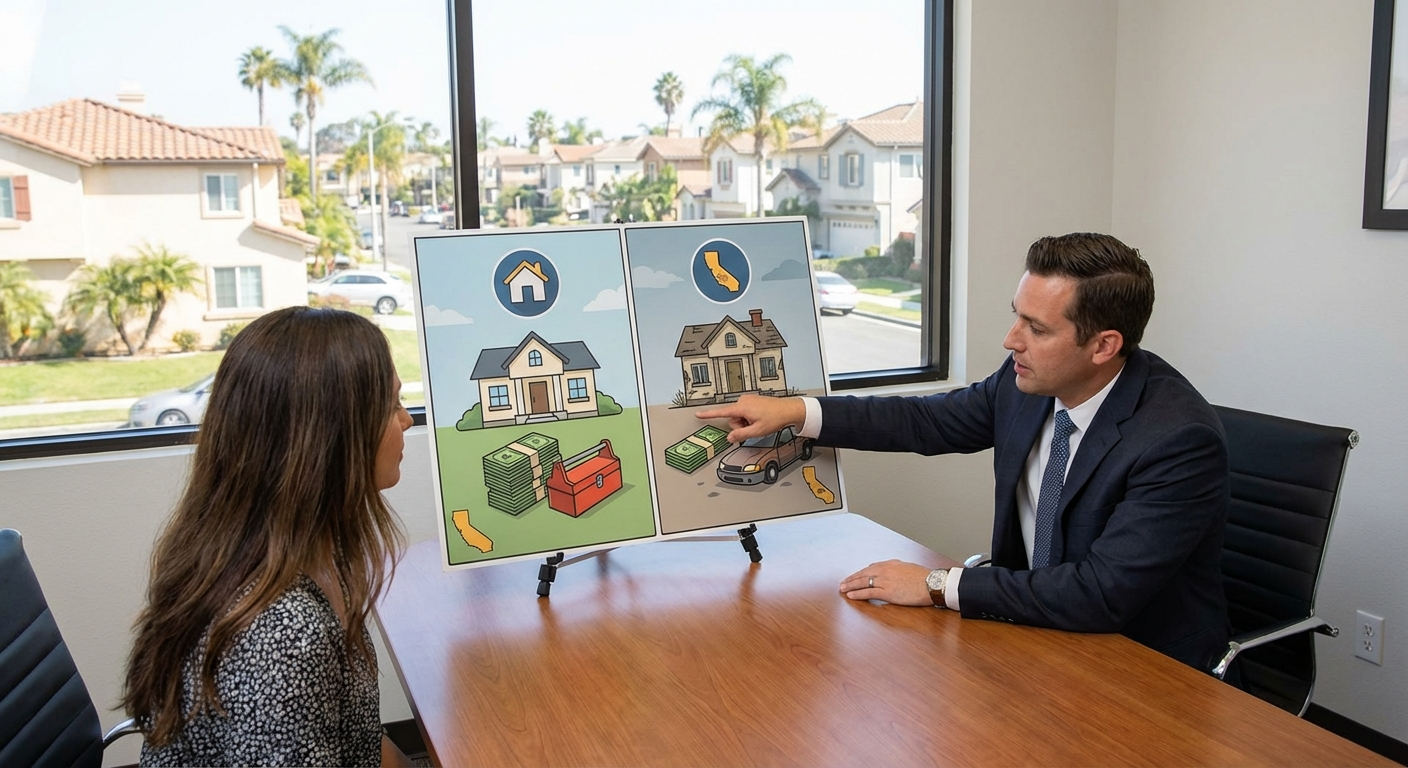
Actual Cash Value: The Harsh Reality of Depreciation
Now, let’s talk about actual cash value (ACV). This is where things can get a bit painful. ACV policies pay you the replacement cost of an item, minus depreciation. What’s depreciation? It’s the reduction in value due to age, wear, and tear.
Imagine that same 10-year-old stove. With an ACV policy, the insurer figures out what a new stove costs today, then subtracts money for every year you’ve owned it. You might get a check for only a few hundred dollars, even if a new stove costs a thousand. That old roof? A 15-year-old roof has seen a lot of sun and rain. An ACV policy would pay you for a 15-year-old roof, not a brand new one. You’d get a much smaller check, leaving you to cover the significant difference out of your own pocket to get your house functional again.
It’s a big difference. Many homeowners don’t realize they might be carrying an ACV policy until it’s too late – after a disaster, when the check they receive is nowhere near what they need to rebuild or replace. Suddenly, they’re facing thousands, or even tens of thousands, in unexpected out-of-pocket costs.
Why This Choice Matters More Than Ever in California
California is unique. Our rebuild costs are sky-high. Labor is expensive, materials are expensive, and after major events like the 2017 North Bay fires or the potential for 2025 LA fires, demand for contractors and supplies skyrockets, driving prices even higher. Plus, new building codes often require upgrades – like wildfire hardening in brush-heavy areas – adding to the expense.
An ACV policy in this environment can be devastating. If your home is older, say built in the 70s or 80s, and you have an ACV policy, the depreciation on major components like your roof, plumbing, and electrical systems could be massive. You might find yourself with a payout that covers only a fraction of what it costs to meet today’s codes and get your home back.
Here’s where it gets interesting. With some insurers pulling back from the California market – State Farm, Farmers, AAA all have tightened their belts – homeowners are finding fewer options. Sometimes, an ACV policy is the *only* option available, especially for older homes, homes in high-risk wildfire zones, or properties that have had previous claims. The California FAIR Plan, our “insurer of last resort,” sometimes offers ACV for certain coverages. You might even find yourself with an ACV policy on your roof, while the rest of your home is covered for replacement cost. It’s not always a clear-cut choice.
The Hidden Costs and the Peace of Mind
Of course, a replacement cost policy usually costs more upfront. Insurers take on more risk because they’re promising to pay out more money if something happens. But weigh that against the potential financial ruin of an ACV policy. What’s an extra hundred or two hundred dollars a year in premiums compared to a $50,000 bill to replace your roof or rebuild a section of your home?
For most homeowners, the peace of mind that comes with knowing you’ll be made whole again is worth the higher premium. You’re buying certainty, not just a policy. You’re ensuring that a disaster won’t also become a financial catastrophe that forces you to sell or declare bankruptcy.
Navigating Your Options in a Challenging Market
So, what should you do? First, pull out your current policy. Read it. Look for terms like “replacement cost” and “actual cash value.” Pay special attention to what parts of your home and belongings are covered under each. Don’t just assume.
If you find you only have ACV coverage, or a mix, don’t panic. But do act. You might be able to upgrade your policy, or find an insurer who still offers full replacement cost coverage for your property. This can be tricky, especially with market changes driven by things like Prop 103 and the Department of Insurance trying to stabilize things.
This is exactly why having an experienced guide makes all the difference. Someone who understands the nuances of the California market, who knows which carriers are still writing what kind of coverage, and who can explain your options clearly. Karl Susman of California Home Insurance Rates, CA License #0B75129, has been helping California homeowners for years. He’s seen the market shifts, the rising costs, and the confusion firsthand. His team can help you understand your current coverage and explore what’s available to you, ensuring you don’t get caught flat-footed.
You don’t have to figure this out alone. Protecting your home and your future means asking the right questions and getting honest answers.
If you’re ready to understand your options better and make sure your home is truly protected, let’s talk. You can get a quote and start the conversation today: https://californiahomeinsurancerates.com/quote/
***
Frequently Asked Questions About Replacement Cost vs. Actual Cash Value
What if my home is older? Can I still get replacement cost coverage?
It depends. Some insurers are hesitant to offer full replacement cost for very old homes, especially if they haven’t been updated. However, many will still offer it, sometimes with specific conditions or higher premiums. It’s always worth exploring, as even an older home can be rebuilt to modern standards with the right coverage.
Does replacement cost mean I get unlimited money to rebuild?
Not exactly. Replacement cost coverage typically has a limit – the maximum amount the insurer will pay. This limit should be carefully calculated to reflect the actual cost to rebuild your home from the ground up, not its market value. It’s often called “dwelling coverage” or “Coverage A.” Sometimes there’s also an “extended replacement cost” option which offers an additional percentage (like 20% or 25%) above your dwelling coverage limit, which can be a lifesaver with today’s fluctuating rebuild costs.
What about my personal belongings? Is that replacement cost or actual cash value?
Often, your personal belongings (furniture, clothes, electronics) can be covered by either replacement cost or actual cash value, independent of your dwelling coverage. Many policies default to ACV for contents, but you can usually upgrade to replacement cost for a slightly higher premium. This is a smart move, because replacing everything you own after a total loss adds up incredibly fast.
Can I have a mix of both on my policy?
Yes, absolutely. This is more common than you might think, especially for specific components. For example, your dwelling might be covered at replacement cost, but your roof might be covered at actual cash value because of its age. Or, your personal property might be ACV while the house itself is RC. It’s important to read your policy carefully or have an expert like Karl Susman walk you through it to understand exactly what’s covered by which method.
Why would anyone choose actual cash value if replacement cost is better?
Mainly, cost. ACV policies almost always have lower premiums. For some homeowners, especially those on a very tight budget or those with extremely old homes where replacement cost coverage is either unavailable or prohibitively expensive, an ACV policy might be the only viable option to have *any* coverage at all. It’s a calculated risk, trading lower upfront costs for potentially much higher out-of-pocket expenses later.
***
Understanding these distinctions is the first step toward getting the right protection for your California home. Don’t leave your biggest investment to chance. Reach out to Karl Susman and the team at California Home Insurance Rates, CA License #0B75129, for clarity and options. You can call them at (877) 411-5200 or get started online: https://californiahomeinsurancerates.com/quote/
This article is for informational purposes only and does not constitute financial advice.