
Does Home Insurance Really Cover Foundation Damage in California?
Most California homeowners assume their standard policy has their back, no matter what. They picture a worst-case scenario — say, a house settling unevenly, cracks appearing in the walls, maybe even a door that won’t close right — and figure insurance will step in. The short answer is yes, sometimes. The real answer is much more complicated, especially here in the Golden State.
Think of your home’s foundation as its bones. If those bones get damaged, it’s a serious problem, often an expensive one to fix. We’re talking tens of thousands of dollars, sometimes hundreds. And while you might expect your insurance company to cover it, the truth is, many common causes of foundation trouble are actually excluded from typical policies.
Myth: My California Home Insurance Covers All Foundation Damage
This is probably the biggest misunderstanding out there. People often think “damage is damage,” and their policy will pay up. Not always. Standard homeowners insurance generally covers sudden and accidental damage from specific perils listed in your policy. That’s key: “sudden and accidental.”
What does that mean for your foundation? Imagine a pipe bursts under your slab, saturating the soil and causing a section of your foundation to crack and shift. That’s likely a covered event. A fire damages your home, and in the process, compromises the foundation’s structural integrity. That’s probably covered too. These are clear, sudden incidents.
But here’s where it gets interesting. What if the damage comes from something gradual? Like years of expansive clay soils — common in places like the Inland Empire and parts of the Central Valley — slowly expanding and contracting, putting immense pressure on your foundation? Or perhaps poor drainage around your home has been eroding the soil beneath it for a decade. These sorts of issues are usually *not* covered. Insurance companies often call this “settling, shifting, shrinking, or expansion of foundations, walls, floors, or ceilings.” It’s a technical way of saying: “We don’t cover slow-motion damage.”

The Shaky Ground of Earthquakes and Floods
California, as we all know, sits on some active real estate. Earthquakes are a fact of life here. Yet, a standard homeowners policy absolutely will not cover earthquake damage to your foundation, or any part of your home for that matter. For that, you need a separate earthquake policy, usually purchased through the California Earthquake Authority (CEA) or a private insurer. Most people don’t buy it. Premiums can be steep, and deductibles are often high — sometimes 15% or even 20% of your dwelling coverage. That’s a big chunk out of your pocket before a claim even starts paying.
Which brings up something most people miss. Even if you have earthquake insurance, it’s not a golden ticket. You’ll still face that high deductible, and sometimes, the payout might not cover the full cost of a major foundation repair.
Floods are another big one. If your home’s foundation is damaged because of a flood — say, heavy rains in Ventura County cause a river to overflow, or a storm surge hits a coastal property — your standard home insurance won’t pay for that either. You need a separate flood insurance policy, typically through the National Flood Insurance Program (NFIP). Many homeowners skip this, especially if they’re not in a designated flood zone. But flash floods can happen anywhere, and they can wreak havoc on foundations.
When Age and Shoddy Work Bite Back
Let’s talk about maintenance. Your insurance policy expects you to keep your home in good repair. If your foundation cracks because it’s simply old and worn out, or because the original builder cut corners and used substandard materials, your policy isn’t likely to cover it. Insurers exclude damage from “wear and tear,” “deterioration,” “latent defects,” or “faulty workmanship.”
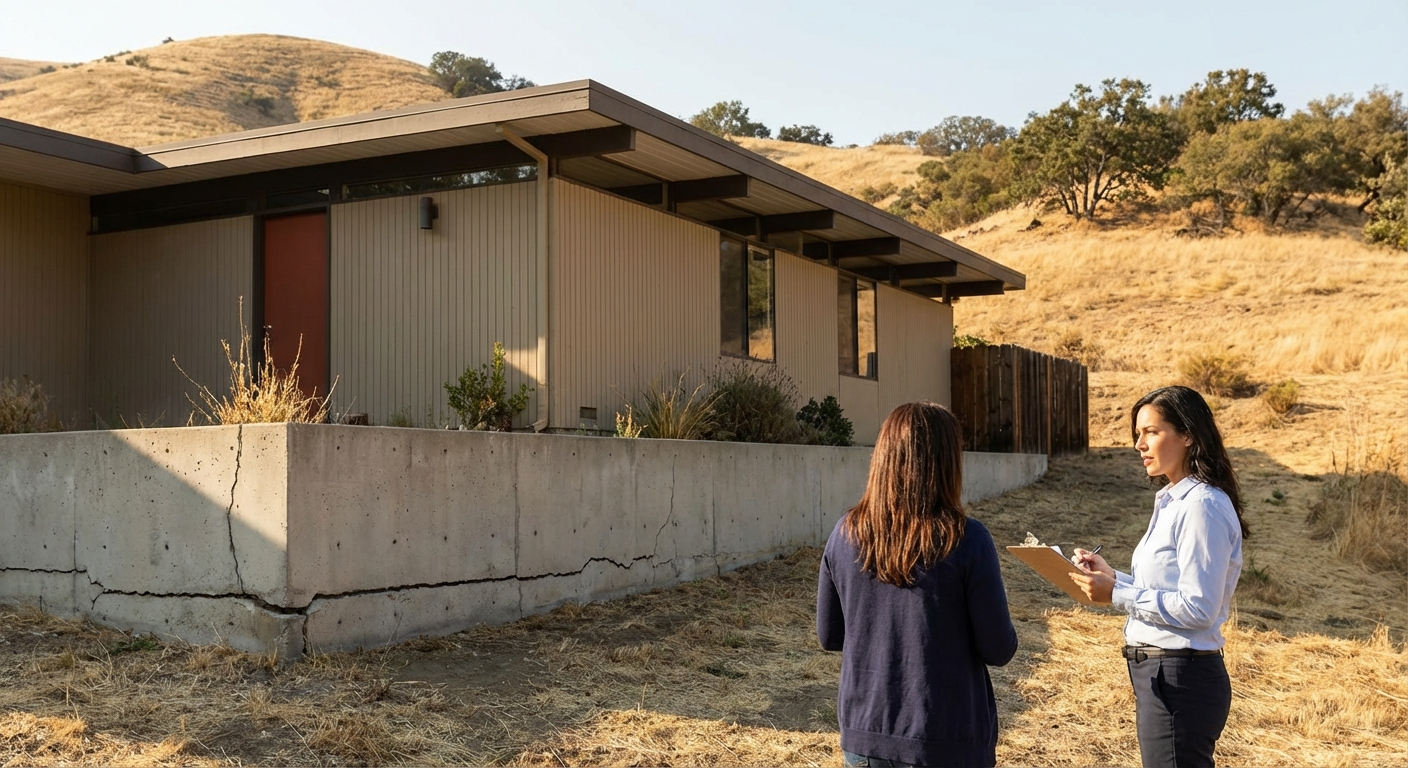
Imagine you buy an older home in Sacramento, and years later, you discover significant foundation issues that were present but hidden when the house was built in the 1960s. That’s a “latent defect” or “faulty workmanship.” Your home insurance won’t pick up that tab. It’s a tough pill to swallow, but policies are designed to cover unforeseen events, not the slow march of time or someone else’s mistakes.
But Wait — What About Landslides and Sinkholes?
California’s varied terrain means we see more than just earthquakes and floods. Landslides, mudslides, and even sinkholes can be a real concern, especially in hilly areas like the Hollywood Hills or parts of Marin County. This is where policy language gets really tricky.
Some standard policies have an exclusion for “earth movement,” which could include landslides. However, if the landslide was *caused* by a covered peril — say, a burst pipe under your house saturated the soil and led to a slide — then there’s a chance it might be covered. It’s often a legal battle, and it comes down to what’s called the “proximate cause” of the damage. What was the first, most direct cause in the chain of events?
Sinkholes are another oddball. Some policies specifically exclude them. Others might cover them if they’re a “catastrophic ground collapse.” It all depends on the precise wording of your policy and the specific circumstances of the sinkhole. This isn’t just theory; it’s why having an expert on your side makes a huge difference.
California’s Tough Insurance Market Isn’t Helping
Honestly, getting good home insurance in California has become a bit of a nightmare. Insurers like State Farm, Allstate, and AAA have either stopped writing new policies or severely restricted coverage in many parts of the state. This isn’t just about foundation issues; it’s about wildfires, especially after devastating seasons like the 2017 Thomas Fire in Ventura County or the potential for a massive 2025 fire season in the LA area.
What does this mean for foundation coverage? Fewer options. Higher premiums. And often, policies with more exclusions or higher deductibles. If you’re forced onto the FAIR Plan — California’s “insurer of last resort” — you’ll find it only covers basic perils like fire, and you’ll definitely need to buy “Difference in Conditions” (DIC) policy to get coverage for things like theft, liability, and yes, sometimes even limited earth movement or water damage. But even those DIC policies have their own exclusions.
So, What *Can* You Do to Protect Your Foundation?
First, understand your policy. Really read it. Don’t just skim the declarations page. Look at the exclusions section. If you don’t understand something, ask. This is where an independent insurance agent becomes absolutely invaluable. Someone like Karl Susman at California Home Insurance Rates (CA License #OB75129) spends his days deciphering these complex policies. He knows the California market inside and out and can explain what’s covered, what’s not, and what options you have to fill those gaps. You can call his team at (877) 411-5200 for advice.
Second, be proactive about home maintenance. Ensure proper drainage around your home. Keep gutters clean. Fix leaky pipes promptly. Trim trees and shrubs whose roots might threaten your foundation. Small preventative measures can save you enormous headaches and costs down the road.
Third, consider additional coverage. If you live in an earthquake-prone area, look into earthquake insurance. If you’re near a river or in a low-lying area, get flood insurance. It might feel like extra money, but it’s a fraction of what foundation repair can cost.
Finally, don’t wait until you see major cracks. Get regular home inspections, especially if you live in an older home or an area known for soil issues. Catching a small problem early can prevent it from becoming a catastrophic one.
Navigating home insurance in California, especially when it comes to something as fundamental as your foundation, is not for the faint of heart. It requires diligence, a clear understanding of your policy, and often, the guidance of an experienced professional. Don’t leave it to chance.
It’s a good idea to speak with an independent insurance agent who can help you compare options from various carriers and explain the fine print. They work for you, not for an insurance company, and can often find policies that offer better coverage for specific risks like foundation damage.
Ready to understand your options better? Get a free home insurance quote today.
Frequently Asked Questions About Foundation Damage and Home Insurance
Does home insurance cover foundation cracks?
It depends entirely on what caused the cracks. If a sudden, accidental event like a burst pipe or a fire led to the cracks, it’s likely covered. But if the cracks are due to gradual settling, expansive soils, poor construction, or normal wear and tear, your standard policy almost certainly won’t cover them.
Is damage from expansive soil covered by home insurance in California?
Generally, no. Expansive soil damage is typically considered a “settling, shifting, or expansion” exclusion. It’s a gradual process, not a sudden accident, and standard policies are not designed to cover it.
What’s the difference between a covered peril and an exclusion?
A “covered peril” is a specific event or cause of loss that your insurance policy promises to cover (e.g., fire, theft, windstorm, burst pipes). An “exclusion” is a specific event or type of damage that your policy explicitly states it will *not* cover (e.g., earthquakes, floods, wear and tear, faulty construction, gradual settling).
How can I find out what my current policy covers regarding foundation damage?
The best way is to read your policy documents carefully, specifically looking at the “Perils Insured Against” and “Exclusions” sections. If you’re still unsure, contact your insurance agent or broker. They can walk you through the specifics of your coverage. Karl Susman and his team at California Home Insurance Rates (CA License #OB75129) are experts in this area and can help clarify your policy terms. You can reach them at (877) 411-5200.
Should I get an inspection if I suspect foundation problems?
Absolutely. Ignoring potential foundation issues can lead to much more severe and costly problems down the line. A professional foundation inspection can identify the cause and extent of any damage, giving you the information you need to decide on repairs and understand if an insurance claim might even be viable.
Don’t guess when it comes to your home’s foundation. Get the facts. Get a free home insurance quote today and talk to an expert who can help you understand your coverage.
This article is for informational purposes only and does not constitute financial advice.