
What’s Hiding Under Your Yard? The Truth About California Service Lines
You pay your home insurance premium every month, maybe every year. You probably feel pretty good knowing your house is covered if a fire rips through a canyon in Ventura County, or if a pipe bursts inside your walls, flooding the living room. It’s a weight off your shoulders. But what about the pipes and wires buried *outside* your house? The ones connecting you to the city’s water, sewer, power grid, or even your internet? Most people don’t give them a second thought. And honestly, why would you? They’re out of sight, out of mind. Until they aren’t.
That’s when a whole new kind of stress kicks in. One minute, you’re watering your prize-winning roses in Irvine. The next, there’s a suspicious wet patch, or your water pressure drops to a trickle. Or maybe the sewer backs up into your bathtub. Suddenly, you’ve got a problem, and it’s not just messy. It’s potentially very, very expensive.
A Buried Problem: Why Service Line Damage Happens
These aren’t just minor inconveniences. We’re talking about the critical arteries and nerves of your home. They carry water in, waste out, power and communication signals through. And they’re vulnerable. Tree roots are a huge culprit, especially in older neighborhoods with mature trees — think those beautiful, leafy streets in Pasadena or the historic areas of Sacramento. Those roots just love to seek out tiny cracks in pipes, expanding them until they cause a full-blown rupture.
Then there’s the ground itself. California’s soil isn’t always stable. We’ve got seismic activity, of course, but even the regular cycle of drought and heavy rain can cause soil to shift and settle. That puts immense pressure on buried lines. Sometimes, it’s just plain old age. Cast iron or clay pipes installed decades ago in places like the Valley or parts of the Inland Empire simply degrade over time. Or maybe a contractor working on a neighbor’s yard accidentally clips a line. It happens more often than you’d think.
The Unseen Bill: What Happens When a Service Line Breaks?
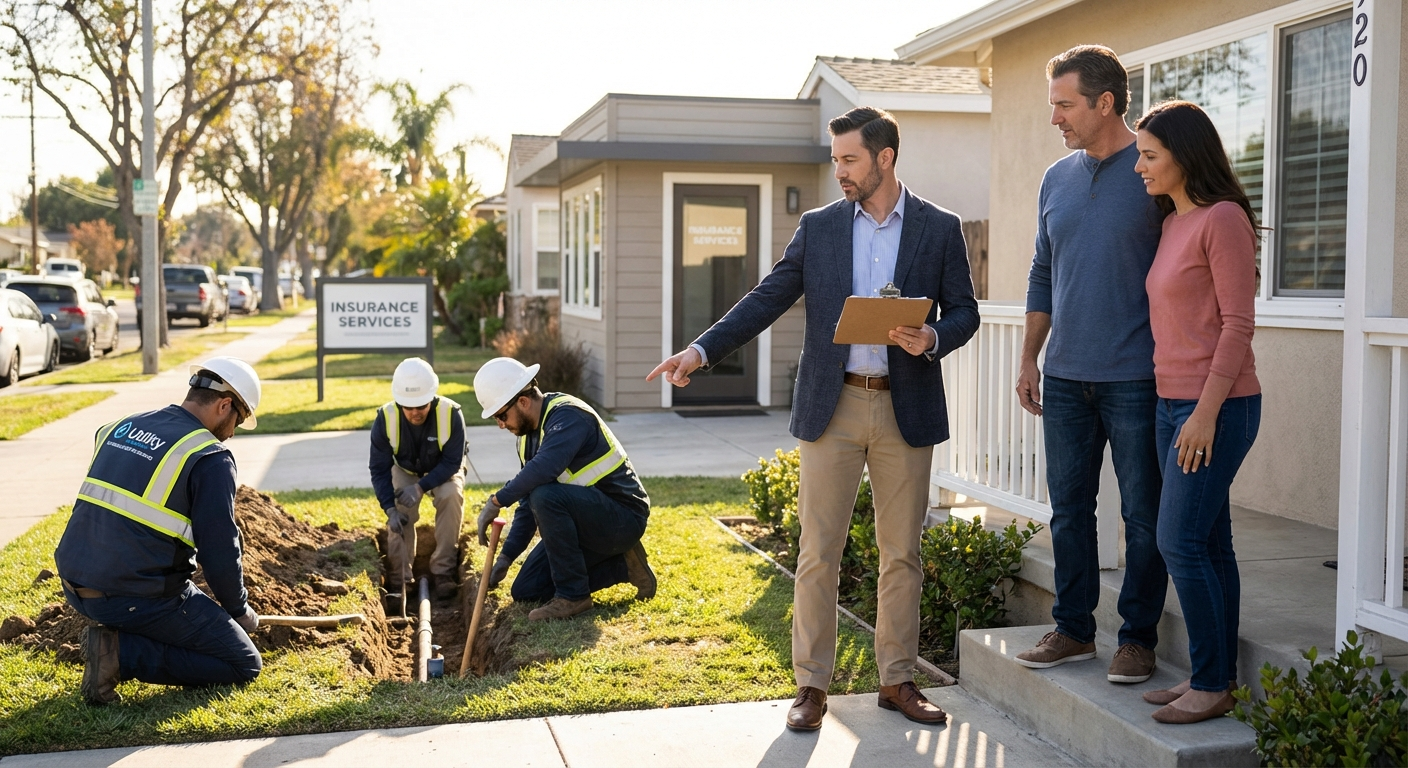
When one of these lines fails, it’s not just an “oops.” It’s a full-blown emergency. Imagine your main water line ruptures. No water for drinking, bathing, flushing. Your yard might turn into a swamp. Or the sewer line collapses. That’s a health hazard, plain and simple. Power lines, gas lines—these are even more serious, demanding immediate, expert intervention.
Here’s where it gets interesting. The repair itself is only part of the cost. First, you need to find the break. That might mean digging up a significant portion of your yard, tearing through landscaping, maybe even part of your driveway. Then comes the actual repair or replacement of the damaged section. After that, you’ve got the cost of backfilling the trench, restoring your lawn, repaving the driveway, replanting the bushes. It’s a domino effect of expenses.
Honestly, these repairs can run into the thousands. We’re not talking a few hundred bucks. For a major sewer line replacement, especially if it’s deep or under concrete, you could easily be looking at $10,000, $15,000, even $20,000 or more. And that’s money that most people don’t have just sitting in their savings account for an unexpected underground catastrophe.
Standard Home Insurance vs. Service Line Coverage: The Big Difference
Here’s a tough pill to swallow: most standard California home insurance policies – the typical HO-3 coverage – won’t touch this kind of damage. Your policy is designed to protect your dwelling, your personal belongings, and your liability *inside* your property lines, and often for specific perils like fire, wind, hail, or theft.
But wait — the service lines connecting your house to the municipal systems? They’re usually considered outside the scope of standard coverage. Why? Because historically, they’ve been seen as part of the utility infrastructure or the homeowner’s responsibility for maintenance, rather than a covered dwelling component. So, when that tree root finally breaks through your sewer pipe, your insurer is likely to say, “Sorry, that’s not covered.” It’s a shock many homeowners only discover when they’re knee-deep in water and a massive bill.
Service Line Coverage in California: Your Home’s Underground Shield
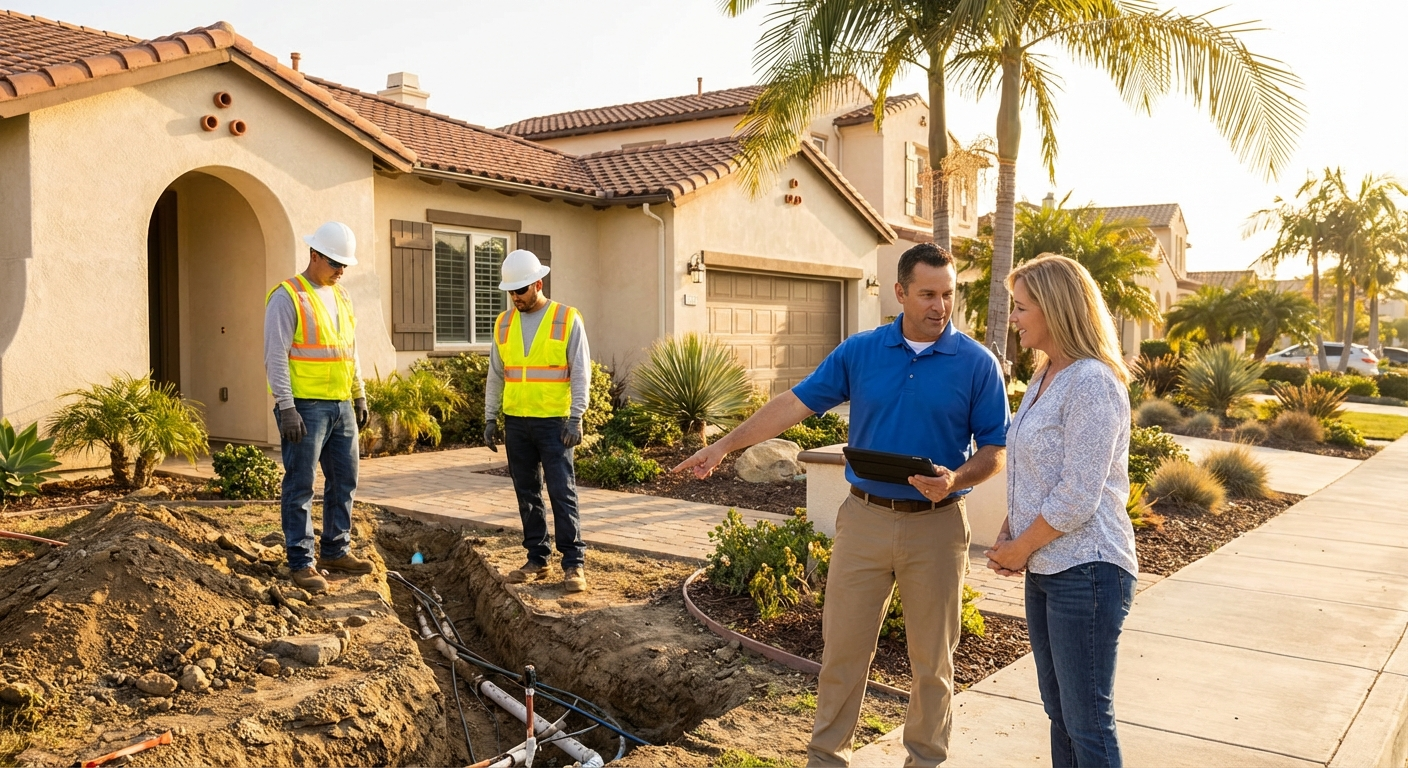
This is where service line coverage steps in. It’s an optional add-on, called an endorsement, that you can purchase for your home insurance policy. Think of it as an underground shield for those unseen, often forgotten lines. It specifically addresses the costs associated with repairing or replacing damaged service lines that run from your property line to your house.
What does it typically cover? It’s pretty broad for service lines. This includes:
* **Water piping:** Your main water line from the street to your home.
* **Sewer piping:** The line carrying waste away from your house.
* **Drainage piping:** Any other essential drainage lines.
* **Power lines:** The electrical cable from the utility pole to your meter.
* **Gas lines:** The main gas pipe supplying your home.
* **Communication lines:** Cable, internet, and telephone lines.
And it doesn’t just cover the pipe or wire itself. Good service line coverage usually includes the excavation costs (all that digging!), the actual repair or replacement, and often the costs to restore your landscaping, driveway, or sidewalk afterwards. Some policies even provide for temporary living expenses if the damage makes your home uninhabitable during repairs. Coverage limits vary, but you might find options for $10,000, $15,000, or even $20,000 in coverage – amounts that can make a huge difference when disaster strikes.
Why Every California Homeowner Should Consider This
California is a unique place, and our homes face unique challenges. We have some of the oldest housing stock in the country, especially in urban centers. Many of these homes, built in the 40s, 50s, and 60s, have aging infrastructure that’s simply reaching the end of its lifespan. If you own an older home in places like San Francisco’s Richmond District, the historic core of Los Angeles, or even parts of San Diego, your buried lines are almost certainly past their prime.
Couple that with our active geology and extreme weather patterns – from intense droughts that dry out and shrink soil, to atmospheric rivers that saturate and expand it – and you’ve got a recipe for ground movement that puts immense strain on those old pipes. The financial hit from a service line break is immediate and substantial. It’s not like a leaky faucet you can ignore for a few days. It demands immediate attention, and that means immediate payment. For a relatively small annual premium, adding service line coverage can save you from a truly devastating financial surprise. It’s about protecting your budget as much as it is protecting your home.
Finding the Right Fit: Getting Service Line Coverage in California
The good news is that many insurance carriers in California do offer service line coverage as an endorsement. You won’t typically buy it as a standalone policy, but rather add it to your existing homeowner’s insurance. State Farm offers it. AAA has options. Farmers Insurance too. But the specifics – what’s covered, the limits, the deductible, and the cost – can vary widely from one insurer to the next.
This is where an independent insurance agent becomes invaluable. They don’t work for just one company. Instead, they work with many different carriers, giving them access to a broader range of options and helping you compare what’s truly available. They understand the quirks of the California insurance market, which, let’s be honest, has been pretty wild lately with all the wildfire concerns and carriers pulling back from certain areas.
If you’re feeling a little overwhelmed by all these details, you’re not alone. Many homeowners are. That’s precisely why Karl Susman of California Home Insurance Rates is here to help. With his expertise and CA License #0B75129, Karl can walk you through the options, explain the fine print, and help you find the service line coverage that makes the most sense for your home and your peace of mind.
Ready to explore your options and get a clearer picture of protecting your home’s hidden infrastructure? Don’t wait until disaster strikes.
Click here to get a personalized quote for California home insurance and service line coverage.
What to Ask Your Agent About Service Line Coverage
Once you’re talking to an agent, be prepared with some questions. This isn’t a “one size fits all” kind of coverage, so you want to be clear on the specifics.
* **What types of lines are specifically included in the coverage?** Make sure it covers everything you need: water, sewer, power, gas, internet.
* **Are there any exclusions?** For instance, is damage from certain types of construction or deliberate acts excluded?
* **What are the coverage limits?** How much will the policy pay out for a single incident? Is it enough to cover a major repair in your area?
* **What’s the deductible?** How much will you have to pay out-of-pocket before the coverage kicks in?
* **Does it cover landscaping and excavation restoration?** This is a big one. The cost of putting your yard back together can be significant.
* **What’s the annual premium for this endorsement?** Get a clear price so you can weigh it against the potential cost of an uncovered repair.
Beyond the Basics: Other California Home Insurance Considerations
Adding service line coverage is a smart move, especially in California’s challenging insurance environment. We’ve seen significant shifts in the market, with premiums jumping and some carriers even scaling back their offerings due to wildfire risks and other factors. It’s not just about finding *any* home insurance anymore; it’s about finding the *right* home insurance, with the right endorsements, to truly protect your property.
Whether you’re in a high-fire risk area near the Angeles National Forest or in a dense urban neighborhood, understanding all your home insurance options is more important than ever. Service line coverage is just one piece of a larger puzzle. But it’s a piece that many homeowners overlook, only to regret it deeply later. Don’t let that be you. A little planning now can save you a lot of heartache and a lot of money down the road.
Protecting your home means protecting everything connected to it, even the parts you can’t see. Take the proactive step to ensure your home’s vital connections are secure.
Frequently Asked Questions About Service Line Coverage
Is service line coverage included in my standard California homeowner’s policy?
For most homeowners, the short answer is no. Standard HO-3 policies typically do not cover service line damage outside your home. It’s usually an optional add-on or endorsement you need to specifically request and pay for.
What kinds of damage does service line coverage protect against?
It generally covers damage from common culprits like tree roots, shifting ground, corrosion, wear and tear, and even accidental damage from digging. It’s designed for unexpected breaks and failures.
How much does service line coverage cost in California?
The cost varies, but it’s often surprisingly affordable, especially when you compare it to the potential repair costs. You might find it adds anywhere from $30 to $100 per year to your premium, depending on the insurer and coverage limits.
Does this coverage apply to service lines on my neighbor’s property?
No, service line coverage typically only applies to the lines that run from the public connection point (like the street) to your specific home, and are your responsibility to maintain. It won’t cover damage to your neighbor’s lines, even if their problem impacts yours.
If my service line is damaged, do I have to use a specific contractor?
Often, no. Most policies allow you to choose your own licensed and qualified contractor for the repair. However, it’s always a good idea to confirm this with your insurance agent and ensure the contractor’s estimate aligns with your policy’s coverage limits.
This article is for informational purposes only and does not constitute financial advice.