
Understanding Your Homeowners Insurance in California’s Fire Zones
Living in California means a lot of sunshine, beautiful scenery, and, for many of us, the ever-present shadow of wildfire season. It’s a reality that’s changed the way we think about everything from landscaping to evacuation plans. But here’s something that often catches folks off guard: it’s also dramatically changed the world of homeowners insurance.
You might be wondering, “What’s the big deal? I have insurance.” And you probably do. But if your home is in or near a designated fire zone – and a huge chunk of California falls into that category, from the hills of Ventura County to the canyons of the Inland Empire – your policy might not be what it once was, or even what you think it is. Honestly, it’s become one of the trickiest parts of owning a home here.
What Exactly Makes a “Fire Zone” a Fire Zone?
When insurance companies and state agencies talk about fire zones, they’re not just guessing. They’re looking at a whole bunch of factors, creating detailed maps that show where the risk is highest. Think about it: a home nestled deep in a canyon, surrounded by dry brush and dense trees, faces a very different threat than one in a flat, open suburban tract.
They’re considering things like vegetation – how much there is, what kind, and how dry it gets. They’re also looking at topography. Is your home on a steep slope where fire can race uphill quickly? What about access for firefighters? Are the roads narrow and winding, making it tough for big trucks to get through? And then there’s historical data. Has that area seen fires before? The short answer is yes, if you live in many parts of the state. The real answer is more complicated, because past fires don’t always predict future ones, but they certainly inform risk models.
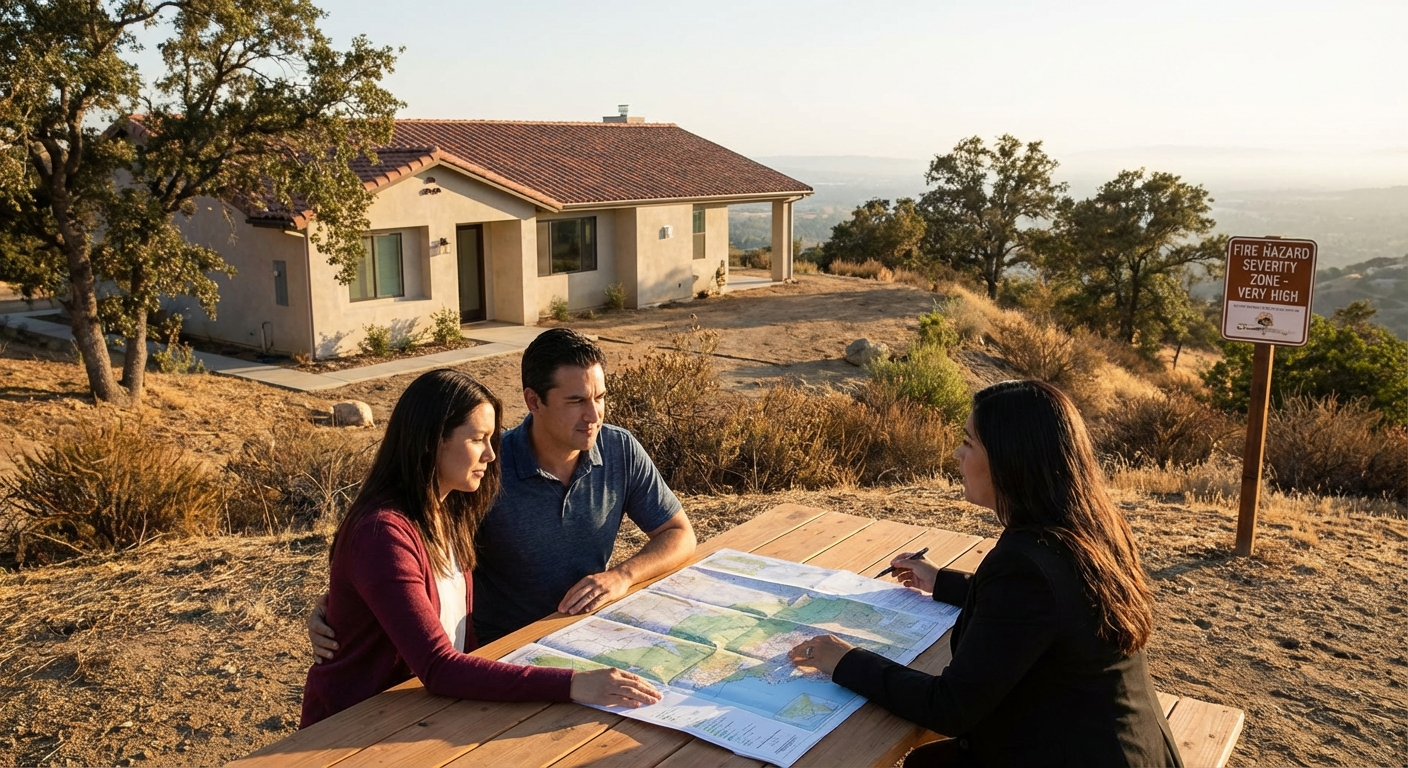
Cal Fire, for instance, has its own maps, categorizing areas into “Very High Fire Hazard Severity Zones.” Insurers often use these, along with their own proprietary models, to pinpoint risk. So, when you get that renewal notice, or a cancellation, it’s not random. It’s based on a detailed assessment of your home’s specific location.

The Shifting Sands of California Home Insurance
For decades, homeowners insurance was pretty straightforward. You picked a carrier, paid your premium, and felt secure. Not so much anymore. After several brutal fire seasons – remember the devastation in Paradise, or the recent scares in the Santa Monica Mountains? – many major insurers started rethinking their strategy in California.
You’ve probably heard the news stories. Companies like State Farm and Allstate announced they were pulling back from new policies. Others, like Farmers and AAA, have significantly scaled back their coverage in high-risk areas or are non-renewing existing policies. It’s not because they don’t like Californians; it’s simply a business decision driven by immense losses. Premiums jumped 40% between 2022 and 2024 for many folks, and even with those increases, some insurers just aren’t seeing a path to profitability in certain high-risk areas.
This leaves many homeowners in a tough spot. You need insurance – your mortgage lender absolutely requires it – but finding it can feel like a quest. You might get a non-renewal notice, or find that the policy you had for years just isn’t available at renewal. That’s when things get stressful, and you start looking for alternatives.
What Happens When Standard Insurance Isn’t an Option?
If you’re in a designated high-risk fire zone, you might find that the “admitted” carriers – the big names you recognize, regulated by the California Department of Insurance (CDI) – won’t offer you a policy. Or they’ll offer one with sky-high deductibles and very limited coverage. This is where the California FAIR Plan often comes into play.
Think of the FAIR Plan as California’s “insurer of last resort.” It’s a state-mandated program designed to provide basic fire coverage for properties that can’t get it anywhere else. It’s a lifesaver for many, ensuring homes remain insurable. But wait – it’s not a full homeowners policy. A standard homeowners policy covers a range of perils: theft, liability, water damage, fire, and more. The FAIR Plan, as its name suggests, primarily covers fire and extended perils like windstorms and explosions. It doesn’t cover things like liability if someone slips and falls on your property, or theft, or certain types of water damage.
So, if you end up with a FAIR Plan policy, you’ll almost certainly need a “Difference in Conditions” (DIC) policy from a separate carrier to fill in those gaps. This means two policies, two premiums, and sometimes a higher overall cost. It’s not ideal, but it’s a solution for many.
Here’s where it gets interesting. Some homeowners might also find options with “non-admitted” carriers, often called surplus lines insurers. These companies aren’t regulated by the CDI in the same way admitted carriers are, which means they have more flexibility in what they charge and what they cover. They can be a good option for hard-to-insure properties, but they come with their own set of considerations. For instance, if a surplus lines insurer goes out of business, the state’s guarantee fund might not cover your losses in the same way it would with an admitted carrier. It’s a different kind of risk, but sometimes it’s the only way to get coverage.
Taking Control: Hardening Your Home and Property
You might feel like you’re at the mercy of insurance companies and fire maps, but that’s not the whole story. You actually have a lot of power to reduce your risk, and in some cases, this can even help with your insurance options.
This is where “defensible space” and “home hardening” come in. You’ve probably heard these terms, but let’s get specific. Defensible space means creating a buffer around your home that helps slow or stop the spread of wildfire. That includes things like:
- Clearing dry brush, leaves, and pine needles from your roof and gutters.
- Removing dead plants and trees within 100 feet of your house.
- Keeping grass mowed short, especially close to your home.
- Creating zones of landscaping with fire-resistant plants.
Home hardening focuses on making your actual structure more resistant to embers and flames. Embers, not direct flames, are often the biggest culprit in homes catching fire during a wildfire. Simple upgrades can make a big difference:
- Installing fine mesh screens over vents to keep embers out.
- Using fire-resistant roofing materials.
- Replacing single-pane windows with multi-pane, tempered glass.
- Enclosing eaves and soffits to prevent ember entry.
- Upgrading to fire-resistant siding materials.
Some communities and insurers are even offering incentives for these improvements. The Wildfire Prepared Home program, for example, offers certification that can sometimes lead to better insurance rates or more options. It’s not a magic bullet, but it shows insurers you’re serious about reducing risk, and that counts for something.
The Role of an Experienced Guide
Navigating California’s insurance market in a fire zone is a lot like trying to find your way through a dense forest without a map. There are twists, turns, and sometimes, you hit a dead end. That’s precisely why working with an independent insurance agent, someone who lives and breathes this stuff, is so important.
An agent like Karl Susman of California Home Insurance Rates (CA License #0B75129) doesn’t just work with one insurance company. He works with many. This means he can shop around for you, exploring options from admitted carriers, surplus lines, and even helping you piece together a FAIR Plan and DIC policy if that’s what’s needed. He understands the nuances of the different policies, the specific requirements for various fire zones, and what might be coming down the pike with regulations from the CDI.
Think of him as your personal insurance detective, sifting through the options to find the best possible fit for your home and your budget. He knows the difference between a policy that just meets the minimum and one that truly protects you. And in today’s tricky market, that expertise is invaluable. Don’t try to figure it all out alone. Give Karl a call at (877) 411-5200. You can also start the conversation online.
Ready to see what options might be available for your home? You owe it to yourself to get clear answers. Don’t let uncertainty about fire zone insurance keep you up at night. Get a quote today and let Karl and his team help you find peace of mind.
Frequently Asked Questions About Fire Zone Home Insurance
What’s the difference between an “admitted” and “non-admitted” insurance carrier?
Admitted carriers are regulated by the California Department of Insurance (CDI). They have to follow strict rules about what they can charge and what they cover. If one goes out of business, the state’s guarantee fund protects policyholders. Non-admitted (or surplus lines) carriers aren’t as strictly regulated by the CDI, giving them more flexibility. They’re often an option for higher-risk properties, but their policies can be unique, and they don’t have the same state backing if they fail.
Will home hardening guarantee me a better insurance rate?
Not always. While home hardening and creating defensible space significantly reduce your risk, and some insurers are starting to offer discounts or more options for homes with these features, it doesn’t guarantee a specific rate or policy. It does, however, make your home a more attractive risk to insurers and, more importantly, makes it safer for you and your family.
My current insurer non-renewed me. What should I do first?
Don’t panic. Your first step should be to contact an independent insurance agent, like Karl Susman. He can help you understand why you were non-renewed and then explore all your available options, including the FAIR Plan, Difference in Conditions policies, and surplus lines carriers. Don’t wait until the last minute before your old policy expires.
How can I find out if my home is in a high-risk fire zone?
You can check Cal Fire’s Fire Hazard Severity Zone maps online. Your independent insurance agent can also help you determine your property’s specific risk classification, as insurers use various models, not just Cal Fire’s. Just remember, these maps are always being updated.
Is the FAIR Plan always more expensive than a standard policy?
Not necessarily. The FAIR Plan itself can be affordable, but remember it only provides basic fire coverage. You’ll likely need a separate Difference in Conditions (DIC) policy to cover other perils like liability and theft. When you combine the cost of both, it might be more expensive than a traditional, single homeowners policy you might have had in the past. It really depends on your specific location and the coverages you choose.
If you’re still feeling a bit overwhelmed, that’s completely normal. This is a complex topic, and you don’t have to tackle it on your own. For personalized advice and to explore your insurance options, reach out to Karl Susman at California Home Insurance Rates (CA License #0B75129). You can call him directly at (877) 411-5200 or visit his website to get a quote. He’s here to help you understand your choices and protect your home.
This article is for informational purposes only and does not constitute financial advice.