
That Little Structure Out Back? It Needs Its Own Protection.
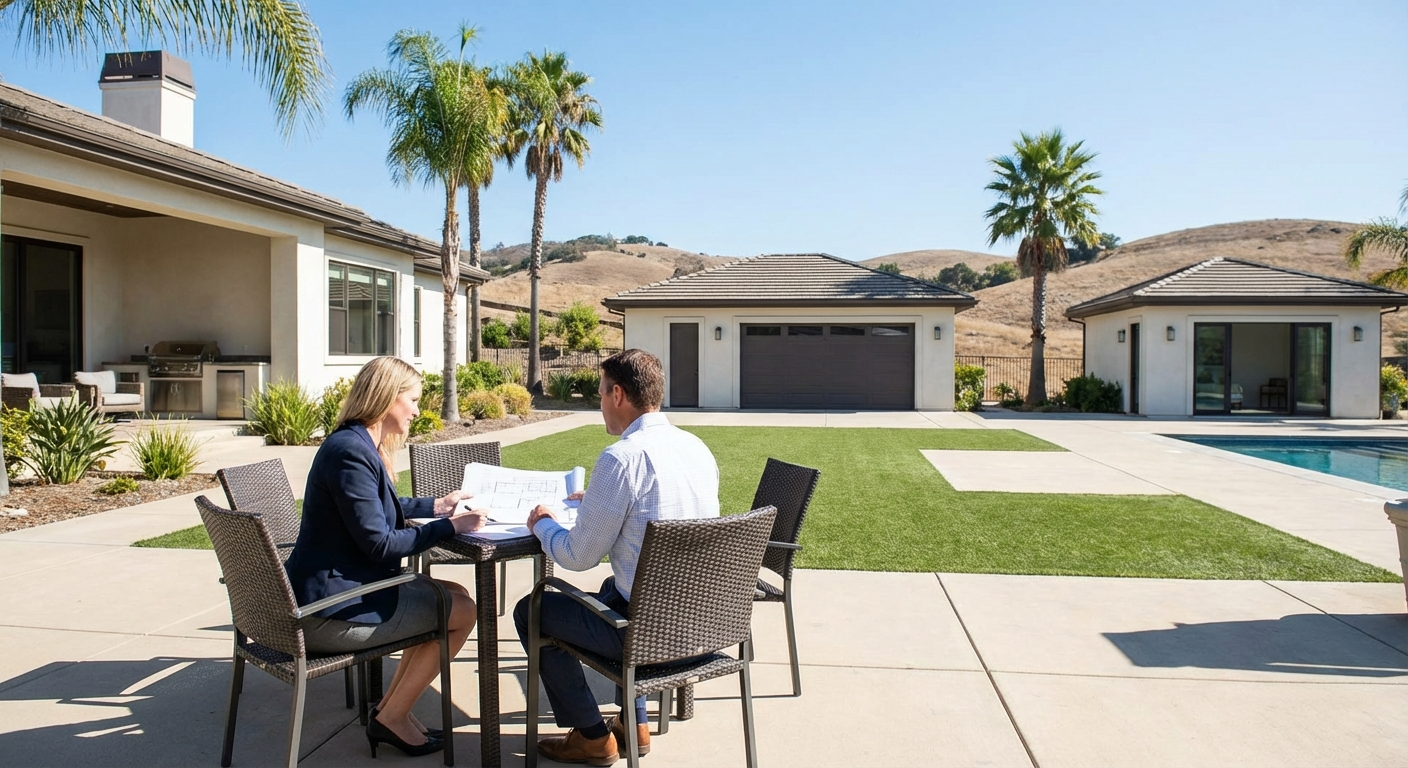
You’ve got a home, right? A main dwelling, the place you sleep, cook, and gather. And you’ve probably got home insurance for that. Good start. But what about everything else on your property? That detached garage where you tinker, the shed holding your gardening tools, the fence that keeps Fido safe, or maybe even a fancy pool house for those scorching Inland Empire summers?
For many California homeowners, these “other structures” often get overlooked. They’re not the main event, but losing one to a wildfire or a sudden storm could be a huge financial hit. That’s where a specific part of your home insurance policy comes in. It’s called—you guessed it—other structures coverage.
What Exactly Counts as “Other Structures”?
This isn’t just about a standalone building. The term covers a pretty wide range of things that aren’t physically attached to your main house.
Think about it this way: if you could pick it up and move it without damaging your home, it’s probably an “other structure.”
* **Detached Garages and Carports:** A classic example. If it’s not part of your main home’s foundation, it’s separate.
* **Storage Sheds:** From the small plastic box to a sturdy Tuff Shed – they all count.
* **Fences:** The one enclosing your yard, the one separating you from your neighbor. Most fences are covered.
* **Gazebos and Pergolas:** These outdoor living spaces can be surprisingly expensive to rebuild.
* **Pool Houses and Guest Houses:** Often substantial structures, sometimes with plumbing or electricity.
* **Retaining Walls:** Especially important in hilly areas of Ventura County or the Santa Monica Mountains where erosion is a real threat.
* **Driveways and Walkways:** Yes, even these paved surfaces can fall under other structures coverage if damaged by a covered peril.
* **Docks:** If you’re lucky enough to have a waterfront property.
The general rule is, if it’s on your property, separate from your main house, and contributes to the value or function of your home, it’s likely an “other structure.”
Why Does This Matter So Much in California?
Honestly, it matters everywhere. But here in California, we face some unique challenges that make this coverage particularly important.
Our state is, well, *vulnerable*. Wildfires regularly sweep through communities, from the hillsides of Malibu to the sprawling ranches in the Valley. A fire doesn’t just stop at your front door. It can jump fences, consume sheds, and turn a beautiful pool house into ashes in minutes.
Then there’s the sheer cost of rebuilding in California. Construction materials aren’t cheap. Labor isn’t cheap. Permitting isn’t cheap. What might cost $10,000 to replace in another state could easily be $25,000 or more in Los Angeles. If your shed burns down and you only have $1,000 in coverage, you’re footing a very large bill yourself.
How Your Policy Usually Handles These Structures
Most standard homeowner insurance policies (HO-3 or HO-5) include other structures coverage as a percentage of your dwelling coverage. This is often 10%.
So, if your main home is insured for $500,000, your other structures might automatically be covered for $50,000. Sounds like a good chunk of change, right?
But here’s the thing. Is $50,000 enough to rebuild a detached three-car garage, a new fence, and replace your custom-built pergola after a fire? Not always. Especially not if you’ve got a fancy pool house or a sizable guest unit.
Many homeowners simply accept the default 10% without really thinking about what they own. That’s a mistake. You really need to consider the actual replacement cost of *all* your separate structures.
When 10% Just Isn’t Enough
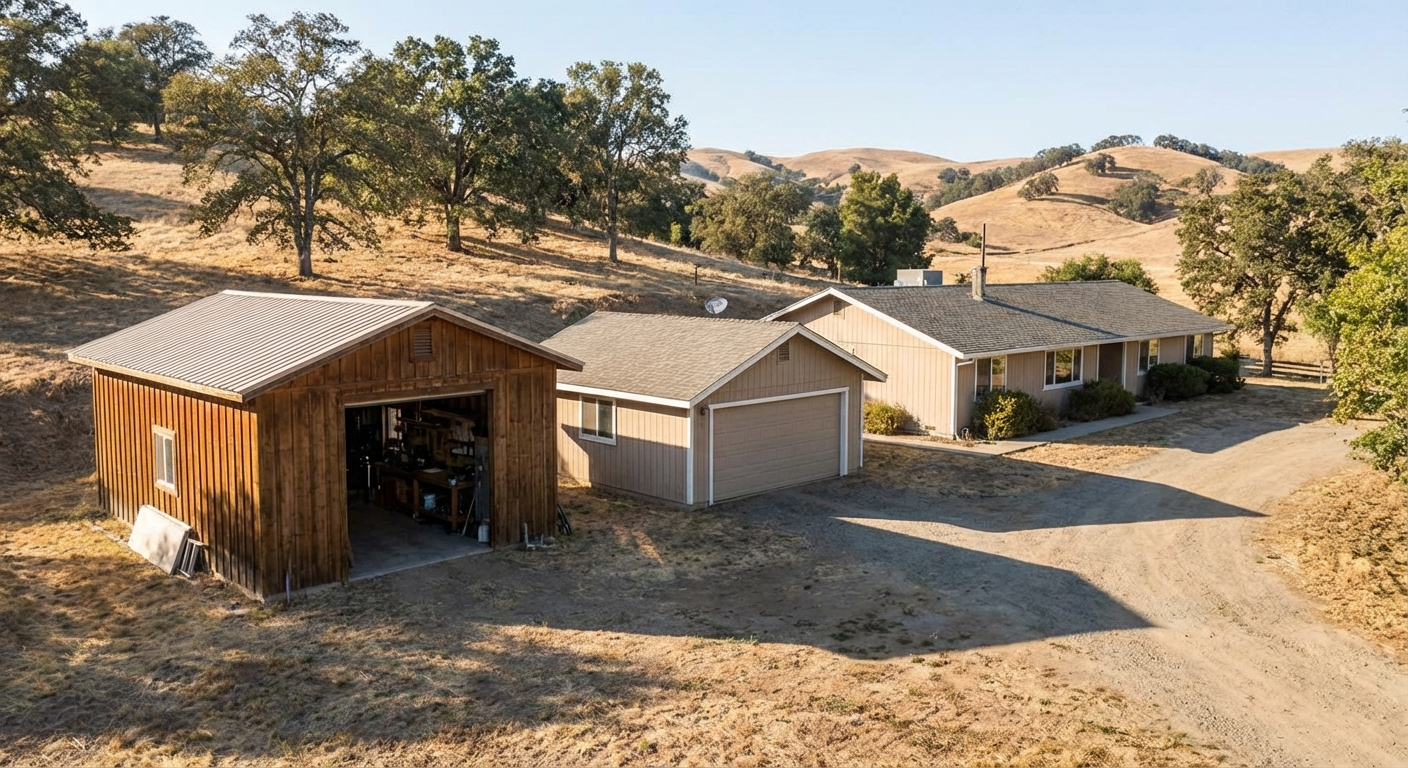
Let’s imagine you own a home in Santa Rosa. You’ve got your house, insured for $700,000. Your policy gives you $70,000 for other structures. That sounds generous.
But you also have a large, detached workshop with its own foundation and electrical, valued at $60,000. You’ve got a sturdy redwood fence around your entire acre, which alone would cost $20,000 to replace. You also have a small, custom-built chicken coop and a garden shed, another $5,000.
Suddenly, you’re at $85,000 in replacement costs for these structures. Your $70,000 coverage means you’re short $15,000 right off the bat, before even considering your deductible.
This is where you can often increase your other structures coverage. It’s usually an endorsement—an add-on—to your policy. The cost for this increase might be less than you think, especially compared to the risk of being underinsured.
Actual Cash Value vs. Replacement Cost: A Big Difference
When something gets damaged, how will your insurer pay out? This is a question that stumps a lot of people. There are two main ways:
* **Actual Cash Value (ACV):** This pays for the depreciated value of the item. So, if your shed was 10 years old, they’d pay you what a 10-year-old shed is worth, not what a brand-new one costs. Big difference.
* **Replacement Cost Value (RCV):** This pays to replace the item with a brand-new one of similar kind and quality, without deducting for depreciation.
Most standard homeowner policies offer replacement cost for the dwelling. But for other structures, you might find some policies – especially older ones or less comprehensive options – default to Actual Cash Value. Always check. You almost always want Replacement Cost for your other structures. It protects your wallet far better.
The California Insurance Quake: What You Need to Know
The insurance landscape in California has shifted dramatically over the last few years. Premiums have jumped 40% between 2022 and 2024 for many homeowners. Insurers like State Farm and Farmers have pulled back from certain areas or stopped writing new policies altogether.
This makes it even more important to understand every part of your policy. When you’re trying to find coverage, especially in brush fire areas, you might end up with fewer options. Some policies might have stricter limits on other structures, or even exclude certain types of structures entirely if they’re deemed too risky.
What about the FAIR Plan? If you’re in a high-risk area and have to rely on the California FAIR Plan for your basic fire insurance, here’s an important distinction: the FAIR Plan primarily covers fire. It *does* offer coverage for other structures, but it’s often more limited. For broader protection against things like theft, vandalism, or wind, you’d need to pair it with a “Difference in Conditions” (DIC) policy from a separate insurer. Which brings up something most people miss. That DIC policy may not always extend the same level of other structures coverage you’d get from a standard policy. It’s a layer cake of coverage, and you need to make sure all your structures are properly accounted for in each layer.
Don’t Make These Mistakes
1. **Forgetting About Your Fence:** It seems small, but a long fence can cost thousands to replace. If you live in an area prone to windstorms or, worse, a fire zone, that fence could be gone in a flash.
2. **Not Updating Your Policy:** Did you just build a new backyard studio in your Oakland home? Or put in a fancy new detached deck overlooking the ocean in La Jolla? Your insurer doesn’t know unless you tell them. If you build a new structure and don’t add it to your policy, it won’t be covered.
3. **Underestimating Rebuilding Costs:** Materials, labor, permits, debris removal – it all adds up. Get a rough estimate for what it would cost to completely rebuild your largest “other structures” from scratch. You might be surprised.
4. **Assuming Earthquake Coverage:** Earthquake damage is *not* covered by a standard homeowner policy, for your main house or your other structures. You need a separate earthquake policy for that. This is a common misconception, especially in a state known for its seismic activity.
When to Review Your Other Structures Coverage
This isn’t a “set it and forget it” kind of thing. Life changes, and your policy should too.
* **After any new construction:** Built that shed? Added a new pergola? Call your agent.
* **Major renovations:** Upgraded your detached garage into a living space? That changes its value and potentially its risk.
* **Policy renewal:** This is your annual chance to review everything. Don’t just auto-renew.
* **Changes in your property’s value:** If your property values have soared (hello, coastal California!), rebuilding costs have likely gone up too.
* **Every few years, just because:** Even without specific changes, it’s a good idea to chat with an expert.
Get the Right Advice for Your California Home
Navigating California home insurance, especially with all its quirks and challenges, can feel like a maze. It’s not just about getting *a* policy; it’s about getting the *right* policy for *your* specific property and *your* unique other structures.
That’s where an experienced independent agent like Karl Susman comes in. He and his team at California Home Insurance Rates don’t work for one insurance company. They work for you. They can look at your specific home, your detached garage, your pool house, your fences, and help you understand what you need. They can shop around with different carriers to find the best options available in the current California market.
Don’t leave your valuable other structures unprotected.
Ready to get a clearer picture of your coverage options? Visit https://californiahomeinsurancerates.com/quote/ to start the conversation. Karl Susman, CA License #OB75129, and his team are ready to help.
Frequently Asked Questions About Other Structures Coverage
Does my homeowners insurance cover my detached garage?
Yes, typically it does! Most standard homeowner policies include coverage for “other structures” on your property, which includes detached garages. This coverage is usually a percentage of your main dwelling coverage, often around 10%. However, it’s always smart to check your specific policy limits to make sure it’s enough to rebuild your garage if something happens.
What if my fence gets damaged in a wildfire? Is that covered?
In most cases, yes, your fence would be covered under your “other structures” coverage if it’s damaged by a covered peril like a wildfire. Given California’s fire risks, this is a really important protection. Just like with other structures, the payout would depend on your policy’s limits and whether it’s Actual Cash Value or Replacement Cost coverage.
Can I increase the coverage for my shed if it’s really valuable?
Absolutely! If the standard 10% of dwelling coverage isn’t enough for your valuable shed, pool house, or workshop, you can usually purchase additional coverage. This is often done through an endorsement (an add-on) to your policy. It’s a good idea to estimate the full replacement cost of your valuable structures and discuss increasing your limits with your insurance agent.
Is my driveway covered under “other structures”?
Often, yes. Driveways, walkways, and even retaining walls can fall under the “other structures” part of your homeowner’s policy, especially if they’re damaged by a covered peril. For example, if a tree falls on your driveway during a windstorm, the repair costs might be covered. Always confirm with your agent, as policy specifics can vary.
What about earthquake damage to my other structures?
This is a common question, and it’s a critical one for California residents. Standard homeowner insurance policies do NOT cover earthquake damage, for your main house or for any other structures. To get coverage for earthquake damage to your detached garage, fence, or other structures, you would need to purchase a separate earthquake insurance policy.
Don’t let guesswork leave you exposed. Take a moment to understand what you’ve got, and what you need. If you’re ready to explore your options or just get some answers, visit https://californiahomeinsurancerates.com/quote/. Karl Susman, CA License #OB75129, and the team at California Home Insurance Rates are here to help you protect every corner of your California property.
This article is for informational purposes only and does not constitute financial advice.